The 7 Essential Physics Equations
Seven equations that shaped modern physics — from Newton's mechanics to the Standard Model. A concise tour of the math behind force, energy, light, atoms, entropy, spacetime, and the strong force.
Seven equations that shaped modern physics — from Newton's mechanics to the Standard Model. A concise tour of the math behind force, energy, light, atoms, entropy, spacetime, and the strong force.
Circuit quantum electrodynamics brings the physics of light-matter interaction into superconducting circuits, providing one of the most promising platforms for quantum computation. This article covers the Jaynes-Cummings model, transmon qubits, and the path from first strong-coupling experiments to today's multi-qubit processors.
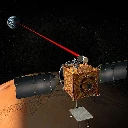
From laser links that outperform radio by orders of magnitude to telescopes peering back to the first galaxies, optical technologies are central to modern spaceflight. This article surveys five key areas: free-space optical communication, space telescopes, optical navigation sensors, photovoltaics, and laser-based remote sensing.
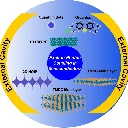
Semiconductors in all dimensionalities ranging from 0D quantum dots and molecules to 3D bulk crystals support bound electron-hole pair quasiparticles termed as excitons.

Future technologies underpinning high-performance optical communications, ultrafast computations and compact biosensing will rely on densely packed reconfigurable optical circuitry based on nanophotonics.
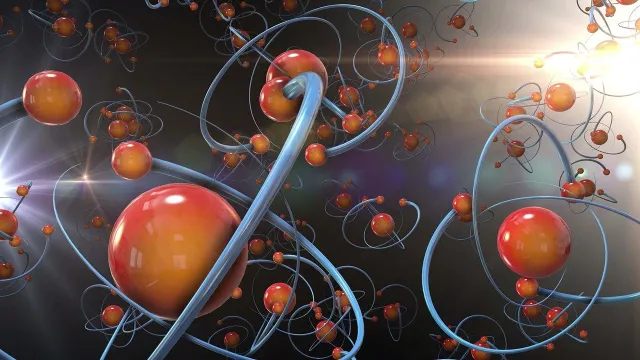
In the initial stages of its development, atomic theory had to bypass the laws of classical electromagnetism in an ad hoc manner in order to explain the stability of atoms.

Have you ever come accross somebody with a 'Let There Be Light' reference followed by some weird looking formulas? Here's the explanations what the reference and formulas are all about!

Devices composed of qubits and a suitably designed nanoantenna might be used for quantum communication.

Alaee et al. recently reported the observation of 'extreme coupling' in plasmonic systems. We will describe how the experiment may give plasmonics new perspectives.

Devices composed of qubits and a suitably designed nanoantenna might be used for quantum computation.